
Why Anti-Aging is the Ultimate Health Secret
อ่านต่อ →
"One man's meat is another man's poison."
Lucretius
This quote captures a health truth perfectly: the very foods we carefully choose can, ironically, become the starting point of food intolerance, a silent threat that undermines your body's balance from within before you even realize it. This condition often hides in your favorite dishes, and its mechanism is completely different from ordinary food allergies. Design Wellness takes you through this crucial distinction, laying the groundwork for good health over the long term.

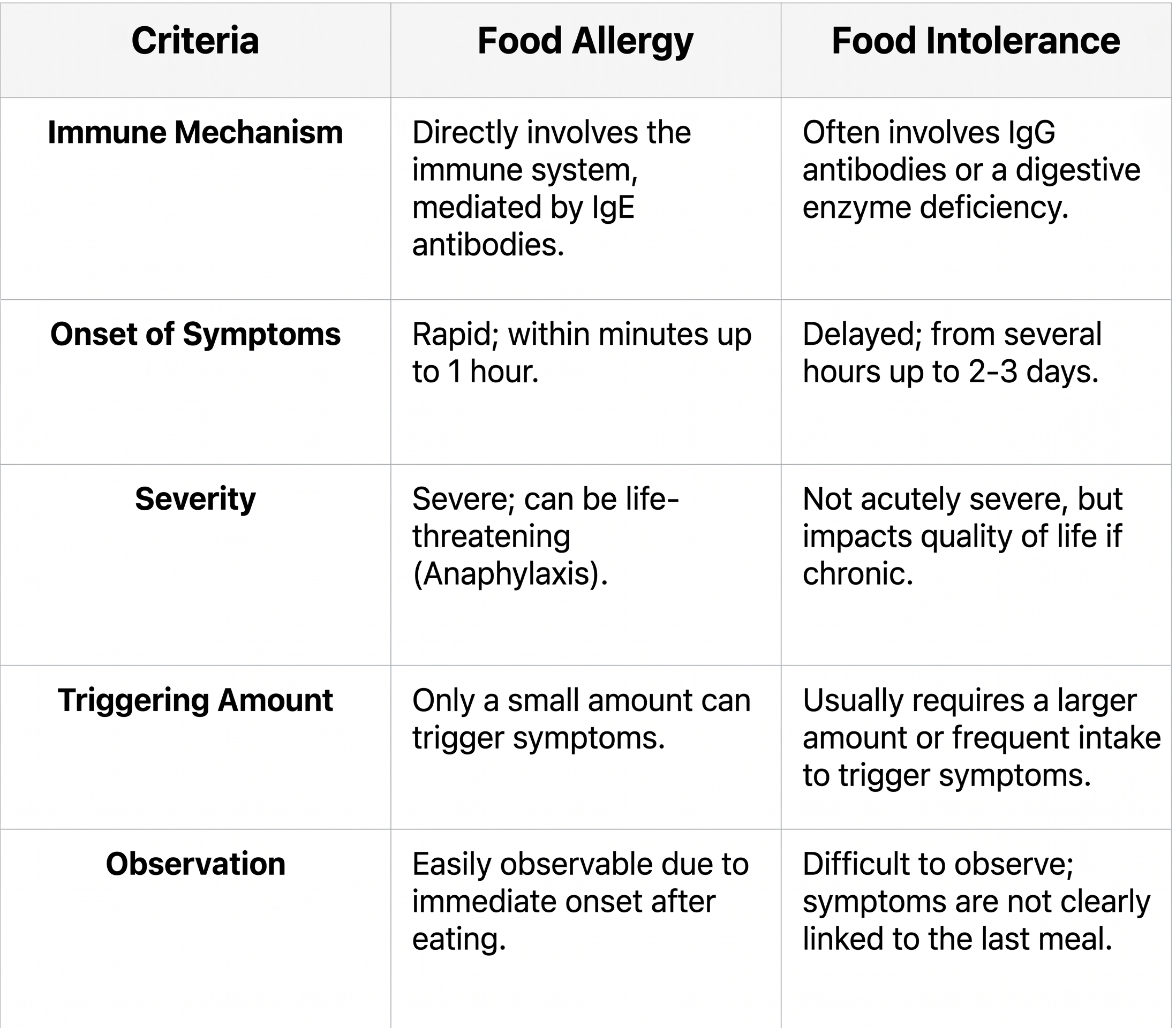
A food allergy is a condition where the body mistakes a protein in food for a threat, triggering the IgE immune system to release histamine rapidly in defense. Symptoms show up suddenly, within minutes to an hour: hives, a swollen throat, difficulty breathing, or even shock, sometimes triggered by just a small amount. In adults, the most common culprits are seafood, nuts, and eggs. This isn't a condition you can manage by simply avoiding a food temporarily — it requires close care from a specialist physician for safety.

Unlike an acute warning, food intolerance is a condition that leaves you dealing with chronic discomfort, one that typically shows up hours, or even days, after you've eaten. What's concerning is that this silent threat often hides in the very foods you eat regularly — milk, wheat, or eggs. Its root cause is chronic, cellular-level inflammation, linked either to IgG immune mechanisms or to a digestive deficiency (such as a missing enzyme), and has nothing to do with IgE. Uncovering the truth behind your plate is therefore the key to lasting recovery.
Now that you understand the underlying mechanisms, clearly telling the two conditions apart will help you assess what your body is going through more accurately. You can see the comparison in the table below.
Now that you know the basic distinguishing signs, take a moment to check in with yourself and see what irregularities your body might be trying to communicate. Food intolerance symptoms tend to show up in vague, ambiguous ways, which leads many people to mistake them for ordinary age-related issues. But watch for these warning signs — the root cause might just be something you're eating.

The digestive system is usually the first line to signal that something's wrong, since it's what comes into direct contact with everything you eat. Common symptoms include bloating, a feeling of fullness, cramping in the abdomen, and irregular bowel habits that alternate between constipation and diarrhea — especially after meals containing milk, wheat, or processed foods.
Many people mistake these for ordinary gastritis or irritable bowel syndrome, overlooking the real culprit hiding in their favorite dish. Keeping a simple log of what you eat alongside the symptoms that follow is a good first step toward spotting the connection and solving the problem at its source.

Beyond your internal systems, skin is another organ that clearly reflects what's going wrong inside the body. If you have red, itchy rashes, breakouts that keep coming back, or dull, dehydrated-looking skin even after switching to good skincare products, the real cause might not be on the surface at all — it may be internal inflammation triggered by certain foods.
Repeated cellular-level inflammation from food intolerance impairs the skin's normal ability to repair itself. That's exactly why so many health- and skin-conscious people are now turning to testing for food-related root causes alongside topical skincare, in order to restore lasting skin health.

It's not just your appearance that takes a hit — inflammatory compounds from food intolerance can also travel through the bloodstream and disrupt the central nervous system, leaving many people dealing with brain fog, sluggish thinking, poor concentration, or chronic migraines with no obvious cause.
Accumulated fatigue that no amount of rest seems to fix isn't always down to stress or a heavy workload — it can come from the body diverting massive amounts of energy to deal with hidden internal inflammation. Fixing the problem at its root is therefore the key to getting your alertness and peak performance back.

Beyond mental fatigue, body aches are another commonly overlooked sign. The junctions between muscle and bone are prime real estate for silent inflammation to accumulate, which is why many people experience joint pain, or chronic tightness in the neck and shoulders, without ever having office-syndrome-style risk behaviors or intense exercise habits to blame.
This food-driven, cellular-level inflammation makes muscles tighter and slower to recover, getting in the way of your active lifestyle. If relaxing spa massages or physical therapy only bring temporary relief, checking for a connection to what you eat regularly may be the solution that truly unlocks lasting comfort.
Chronic conditions that are hard to pin down — brain fog, weak-looking skin, or an unsettled gut — may in fact stem from food intolerance hiding in your everyday meals, quietly triggering your body's resistance without you ever realizing it.
To find the true culprit, Design Wellness is ready to help you analyze it with the Food Inflammation Test, which measures IgG antibodies alongside C3d to precisely identify the foods triggering your food intolerance. It's led by Dr. Wimlak Suadee (Dr. Wim), a physician specializing in anti-aging and preventive medicine with more than 22 years of experience in integrative healthcare. She'll help you plan precisely which foods to avoid at the source, and adjust your diet to restore lasting health.