
Why Anti-Aging is the Ultimate Health Secret
อ่านต่อ →
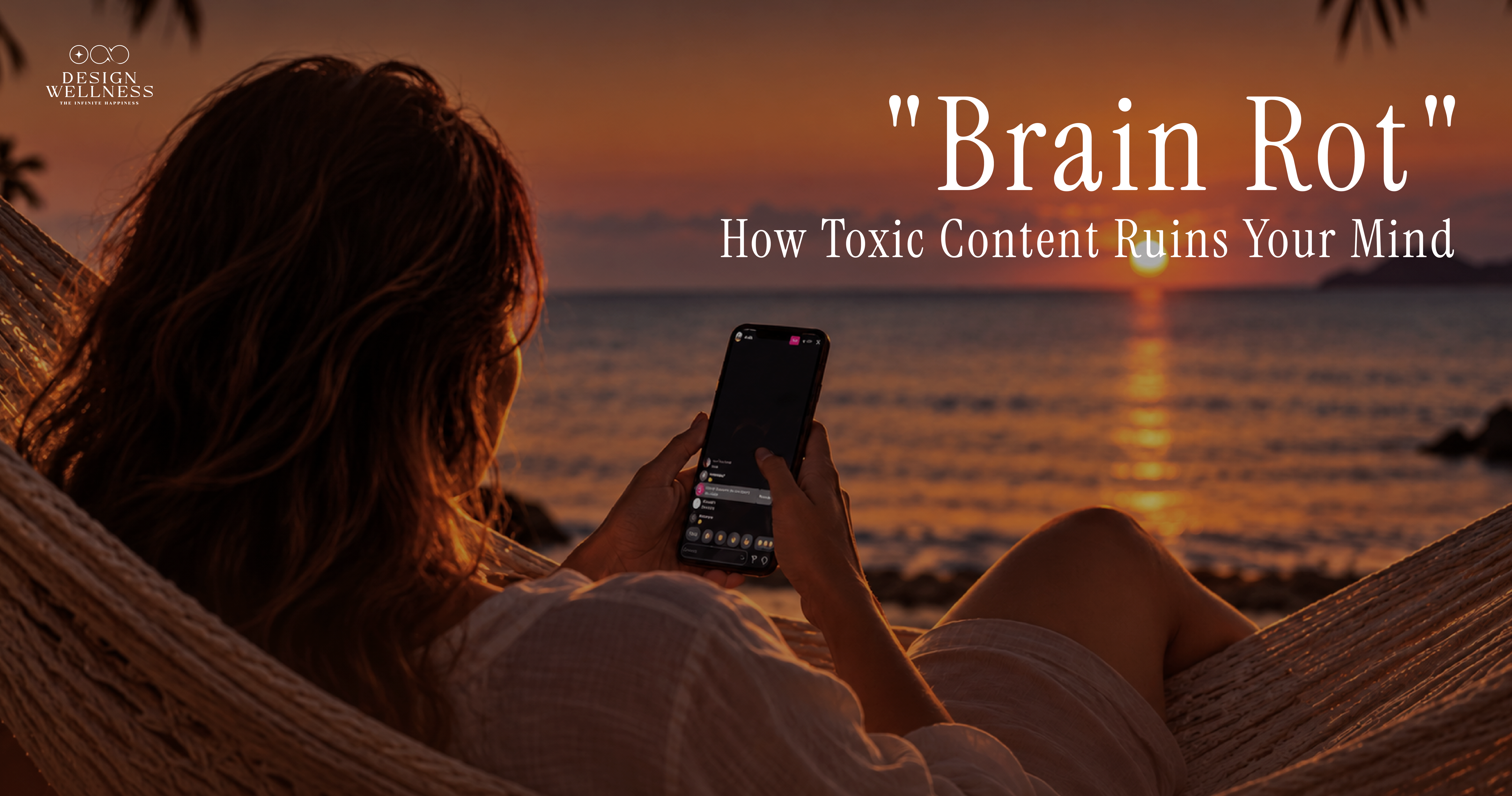
Constantly consuming short-form content online can quietly erode how well your brain functions, leading to a condition known as brain rot. In an age when information floods in nonstop, many people are starting to notice mental fatigue, a shorter attention span, or forgetting simple things.
These symptoms aren’t just ordinary tiredness. They may be the beginning of a cognitive health crisis that wears down your performance over time. To help you keep your brain from aging before its time, Design Wellness explains this silent threat and takes a closer look at how to protect your brain health for the long term.

Brain rot is a decline in mental sharpness caused by consuming too much fast-paced, shallow digital content, to the point that the nervous system becomes chronically fatigued and dopamine falls out of balance. When you spend hours scrolling aimlessly through social media, your brain gradually loses its ability to concentrate and process information in depth. For anyone whose work depends on focus, this is a silent threat that steadily undermines analytical thinking and long-term health.
Fun fact: “Brain rot” isn’t new slang. Henry David Thoreau first used the term back in 1854 in his book Walden. It has since made a comeback, with usage jumping by 230% and earning it the title of “Word of the Year 2024,” a reflection of growing concern worldwide about the effects of short-form content.
The signs of brain rot rarely appear overnight. Instead, they hide in everyday habits that many people dismiss as normal tiredness. The most worrying part is that sleep alone can’t fix these symptoms, because the root cause is a pattern of information consumption that trains the brain to expect speed and small rewards, until deep thinking slowly weakens without you realizing it. Check yourself against these warning signs:

The symptoms of brain rot, such as distraction, forgetfulness, and poor concentration, are so similar to those of ADHD (attention-deficit/hyperactivity disorder) that many people confuse the two. In reality, they are not the same. Although they may look alike on the surface, their causes and solutions are completely different:
A simple way to tell: If your trouble focusing only started during a period of heavy screen use, that’s the effect of brain rot. But if you’ve struggled with daydreaming and severe forgetfulness that affected your daily life since childhood, it may be a sign of ADHD.
The reason short-form content is powerful enough to cause brain rot lies in algorithms designed to serve up videos you like and surprising content at random. These unpredictable emotional “rewards” trigger repeated dopamine release until the nervous system becomes hooked on speed. Data from large studies confirms that scrolling online for hours a day leads to a clear decline in attention and self-control. Once the brain gets used to easy gratification, it starts resisting work that requires deep thinking, and your cognitive abilities suffer in two main ways.
Cognitive offloading means handing your thinking over to technology, such as letting algorithms feed you curated, ready-made information instead of researching things in depth. Relying on technology isn’t wrong in itself. But when you get used to receiving ready-made answers from short content without ever practicing analytical thinking yourself, the neural networks responsible for critical thinking naturally begin to weaken, much like an unused muscle.
The result is a noticeable decline in your ability to make important decisions. A study of more than 468 people found that relying on digital tools was linked to lower self-reliance, reduced tolerance for difficult tasks, and shallower learning. People in this state tend to run out of mental energy quickly, which becomes the starting point of brain rot when they face complex situations with no ready-made answers.
Beyond declining analytical skills, taking in huge amounts of information quickly and continuously also leads to digital amnesia, or the “Google effect,” a phenomenon in which the brain remembers where to find information better than the information itself, because it knows it can always look it up again. This is backed by a survey of more than 6,000 adults, which found that 53% couldn’t remember their own children’s phone numbers, 86% agreed there is now more information than the brain can handle, and 43% of younger people admitted their smartphone now stores everything for them.
Letting technology remember things to save mental energy isn’t always a bad thing. But combined with nonstop scrolling through short content, the brain has no room left to process information. New information keeps piling on top and interrupts the process of forming memories, so short-term memories aren’t converted into long-term ones as they should be. This is another key factor that accelerates brain rot before its time.

The effects of brain rot don’t stop at forgetfulness or temporary lapses in focus. They inevitably spread to wear down your mental health and long-term potential. Brain rot is directly linked to feelings of loneliness, poorer sleep quality, and rising anxiety. What’s more, attention problems, screen addiction, and relying on technology to remember things all feed into one another, creating a cycle that undermines attention control. For people who rely on peak brain performance to make decisions every day, this cycle of chronic stress leads to burnout that destroys both your sharpness at work and your overall quality of life. It’s not something to brush aside.
The good news is that brain rot can be reversed, and you’ll see results sooner than you might think. Cutting back on internet use for just two weeks can restore your attention to a level comparable to being 10 years younger, while significantly improving your mental health. More than 91% of people who reduced their screen time saw a clear improvement in their quality of life, including an average of 17 more minutes of sleep per night and a drop in screen time from 5 hours to under 3 hours a day. You can start reclaiming your brain’s performance with these habits:

Your brain is your most valuable asset for driving success. Facing mental fatigue in an age of information overload is a warning sign that it’s time to rethink the balance in your life. Easing the load on your nervous system doesn’t just help you regain focus and sharp decision-making. It’s also an investment in lasting health that directly benefits your quality of life and your work over the long term.
Because a healthy brain and body require precise care, at Design Wellness we focus on personalized care under the close supervision of Dr. Wimlak Suedee (Dr. Wim), a physician with more than 22 years of experience in integrative health. Dr. Wim decodes your body in detail to uncover the root cause of brain fog or mental restlessness, then designs a tailored recovery program, including vitamins that support neurotransmitter production, rebalancing your stress hormones, and restoring healthy, high-quality sleep.
Don’t let lost focus hold back your progress or put strain on your relationships. Let us help design a health plan that fits your lifestyle, care for your foundation from the inside out, and bring you back to a stronger version of yourself, ready to take on every challenge with confidence.